Introduction
Define the fields that records use in a database, then use their data in views, forms, reports, and integrations.
Fields define the structured data stored by records in a database. Use them instead of comments or descriptions when you need consistent values that Blue can filter, report, import, or export.
The API and Webhooks support custom fields and their structured data.
Fields in a database
Each database has its own fields. A blank workspace starts with a Records database containing fields such as Title, Description, Completed, Due date, Assignee, Files, Tags, and List.
Tags is a Select (multi) field. List is a Select (single) field. These are preset field names, not separate types of record data. You can use other names and select fields for your own categories and process stages.
A database created with New database starts with a Name field. Add the fields that its records need. Comments, checklists, and dependencies are separate record features; see Records.
Add custom fields when you need more structured data. For example, add a Currency field named “Sales Price” to records in a sales database.
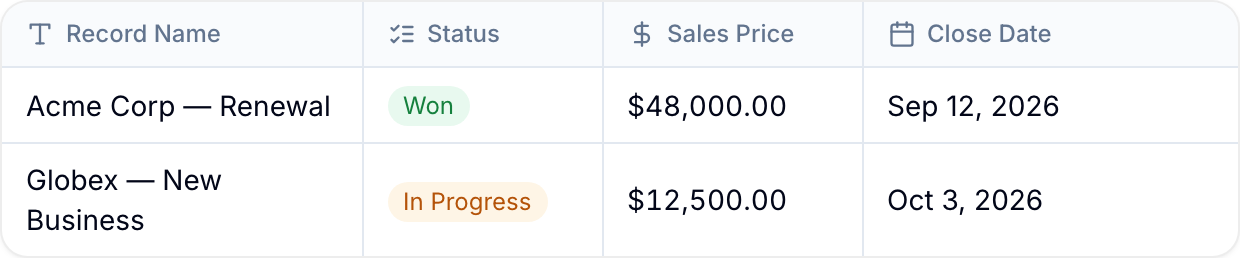
Each custom field adds a column to the database. You can use custom field data in forms, CSV imports, CSV exports, filters, and Analytics.
Custom fields have two types:
- Editable custom fields: Users enter data in these fields. For example, an Email field accepts an email address. A Single Select field accepts one option from a list.
- Read-only custom fields: Blue displays data but users cannot enter a value. A Unique ID field displays a record identifier. A Formula field displays a calculation. A Lookup field displays data from referenced records in other workspaces.
Many field types can also fill themselves in. Turn on Fill with AI to have Blue generate a field’s value from the record’s other data. See AI Fields.
Select fields can also filter their options from another select field’s value. See Conditional Select.
Create custom fields
Workspace Owners and Project Administrators can create and manage custom fields.
- Open a record in the database.
- Select Manage fields. Blue opens Field Management.
- Select Add Field.
- Configure the field, then select Create.
As you type the name, Blue suggests a field type that matches it and marks it Suggested. For example, “Invoice total” suggests Currency, and “Fecha de entrega” suggests Date. Select any other type to override the suggestion.
Organize fields
Use field dividers to divide a record into visual sections without changing its data. The organization field library lists fields shared across the organization.
Delete a custom field
- Open a record in the database.
- Select Manage fields.
- Select the field that you want to delete.
- Select Delete.
- Enter the field name, then select Delete field.
Control field access
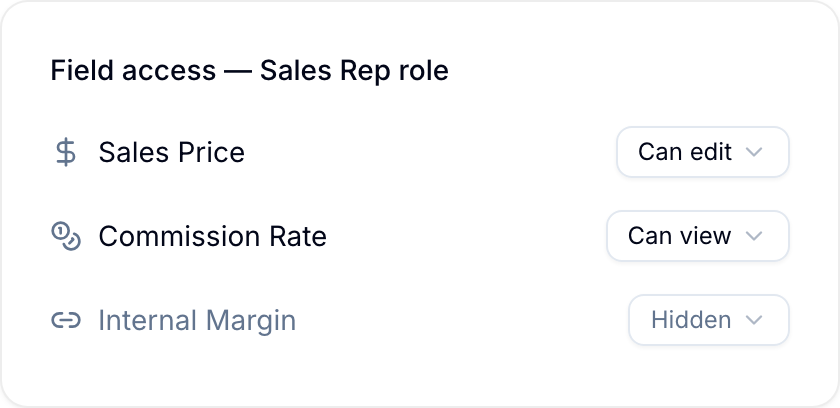
Use field-level permissions to control access to custom fields. Use a custom user role to set which user groups can view or edit each field.